Situation
A beverage processing area relied on a SCADA package running on an unsupported server OS. Operators tolerated slow graphics, but IT flagged security exposure and backup failures. Management required migration without losing twelve months of historian data used for quality investigations.
Problems encountered
- Thousands of tags included duplicates created by past projects.
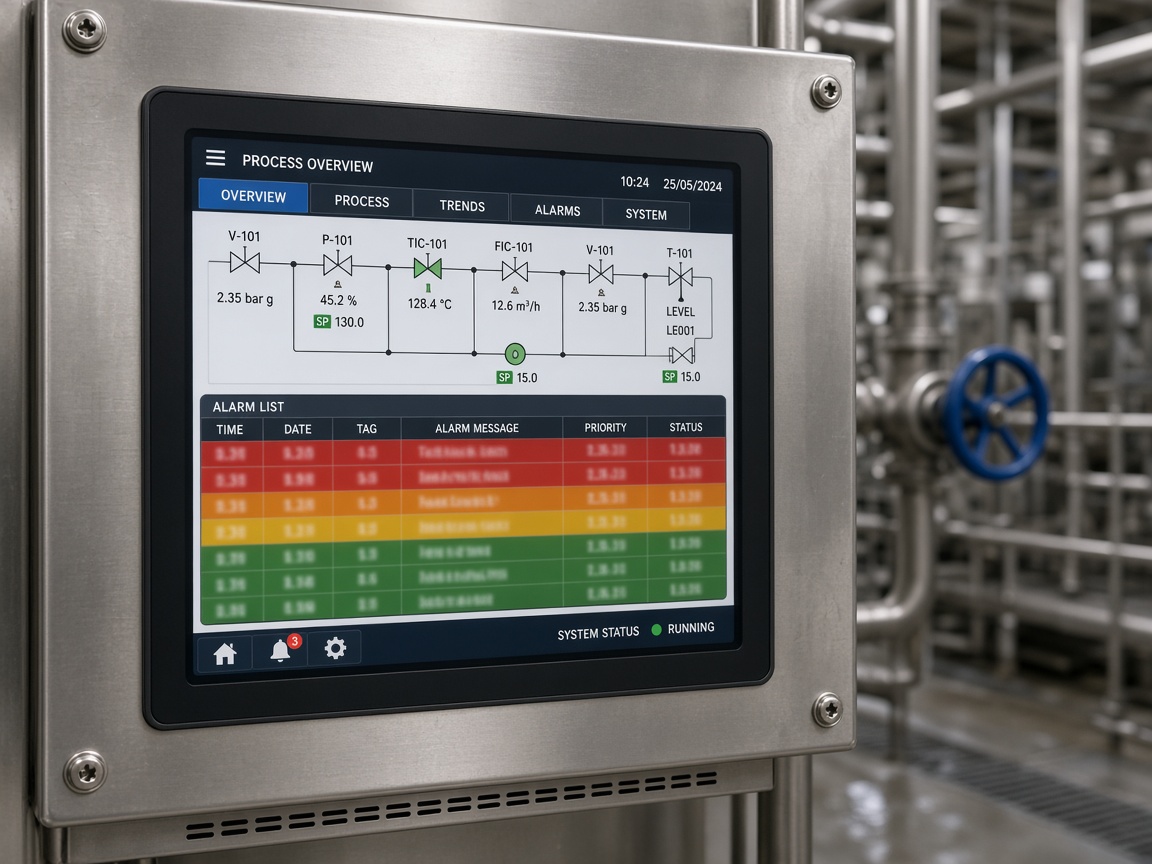
- Alarm floods masked genuine equipment faults—operators acknowledged batches without reading.
- Graphics contained embedded scripts nobody understood.
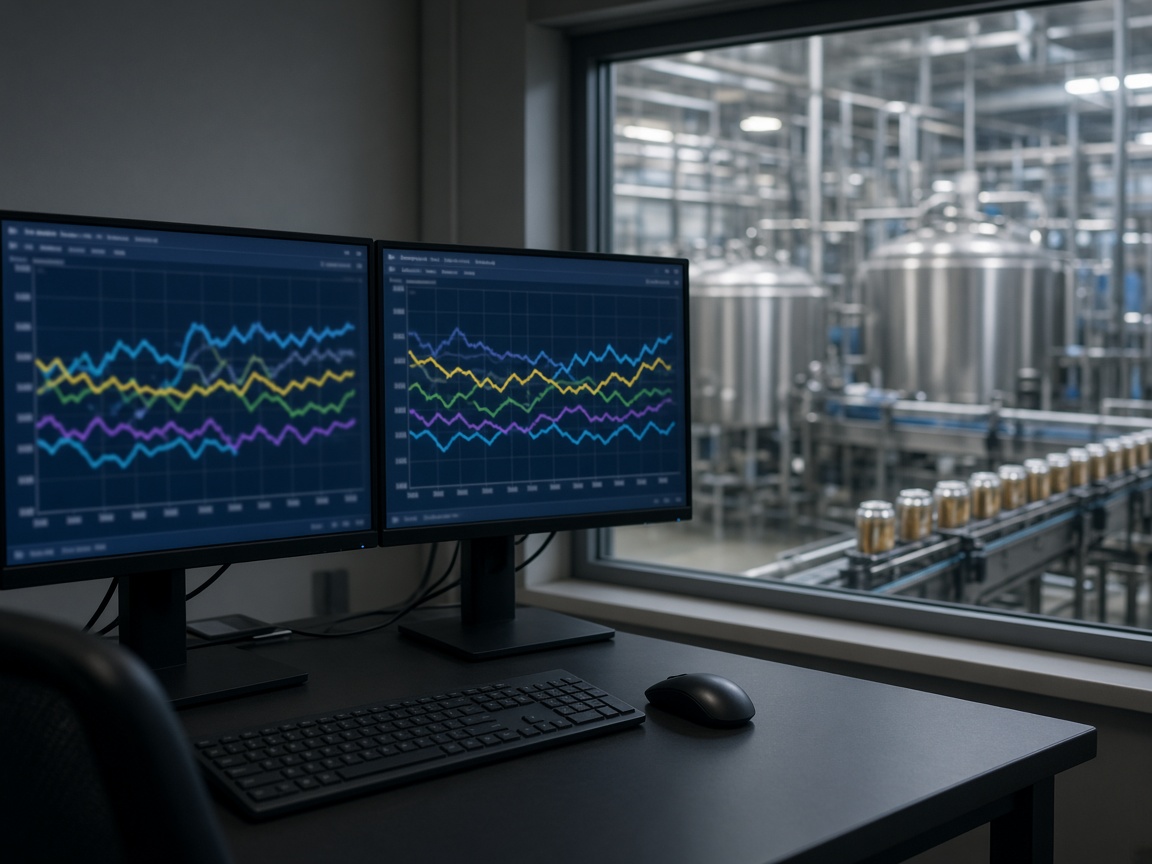
- Night shift used paper logs because they distrusted on-screen trends.
Engineering response
We executed a tag rationalisation pass: dead tags archived, duplicates merged with ICD notes. Alarm philosophy workshops classified priorities and mandated cause/action text. New HMI templates were applied area-by-area so training could occur per zone rather than all at once.
Historian migration used parallel recording for two weeks; comparisons proved data alignment before decommissioning the old collector. Phased cutover let operators fall back to read-only legacy trends while learning new navigation.
Outcomes
Security-critical server decommissioned on schedule. Mean alarms per hour fell after rationalisation, without reducing coverage of safety-related events. Quality investigations continued with exported trend files that matched pre-migration samples on spot checks. Operator feedback on fault diagnosis improved in post-project training reviews.